Palamedes

The Story of Palamedes

When Ulysses, king of Ithaca, saw Agamemnon, Menelaus, and Palamedes himself arrive on his island, wanting to persuade him to leave for the Trojan War, he feigned madness and was found plowing the beach with a plowshare pulled by an ox and a donkey, sowing handfuls of salt.

But Palamedes, sensing the ruse, tore little Telemachus from Penelope's arms and threw him in front of the plow, forcing Odysseus to restrain the animals so as not to kill his only son, thus proving that he was not mad and therefore fit to go to war. However, he never forgot that it was the young man's intuition that forced him to leave, and as soon as he had the chance, he took revenge, plotting a ruse that led to Palamedes' unjust death sentence.

An eventful genesis

The portrait of this hero, fallen from grace due to Ulysses' slander, must have offered a particularly captivating subject for Sommariva who, removed from the political power he had held until the early nineteenth century, thus wanted to be believed to be the victim of the intrigues of his enemies.

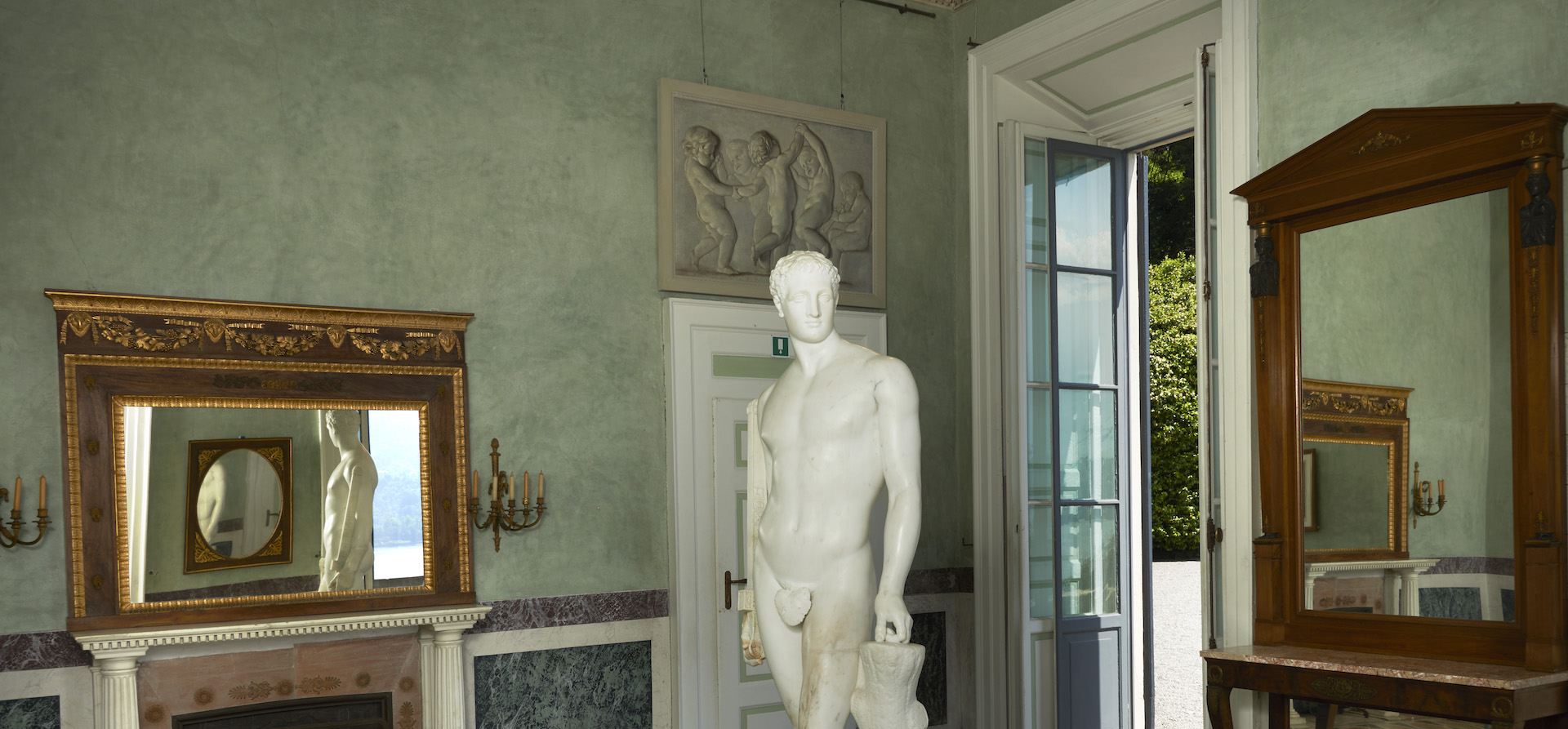
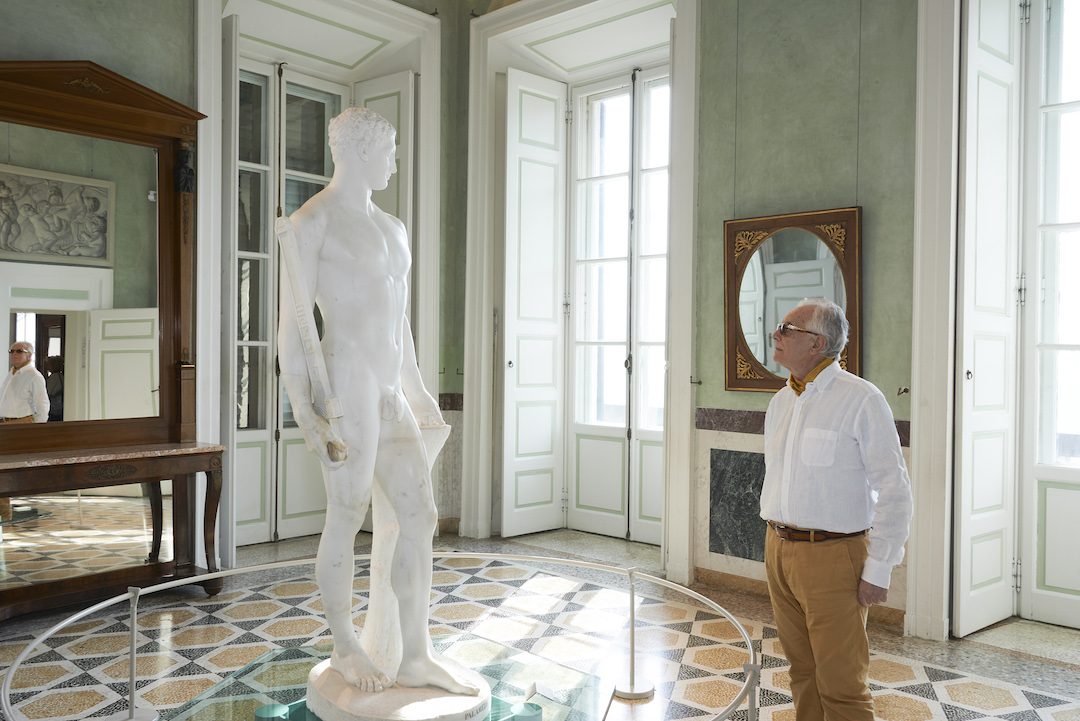
Displayed in Canova's Roman studio in 1805, the statue fell to the ground after a flood of the Tiber River, when the platform on which it rested collapsed, threatening to overwhelm the artist. Damaged in several places, it was restored by Canova himself between 1806 and 1808. It was moved to the villa in Tremezzo in 1818, where it was placed in the same room where it still stands today, with mirrored panels to enhance its absolute formal perfection.

“It is with great regret that I must give you the sad news of a strange accident that occurred in my office on the 25th of this month.”

Antonio Canova to Giovan Battista Sommariva, April 28, 1805

Home / The museum / Palamedes